Did China’s J-10CE, Which Defeated the Eurofighter in Exercises, Expose a New Air Combat Paradigm Where Advanced Integration Determines Victory?

As one of the youngest members of the team, Tyler Hansbrough is a rising star in financial journalism. His fresh perspective and analytical approach bring a modern edge to business reporting. Whether he’s covering stock market trends or dissecting corporate earnings, his sharp insights resonate with the new generation of investors.
Authored On
Modified
China’s J-10CE fighter achieved a clean sweep against the Eurofighter Typhoon in simulated engagements
Europe’s delayed radar modernization and vulnerabilities in network-centric warfare exposed
Drones emerging as a decisive element of advanced air combat, with the United States and China holding a clear advantage over Europe
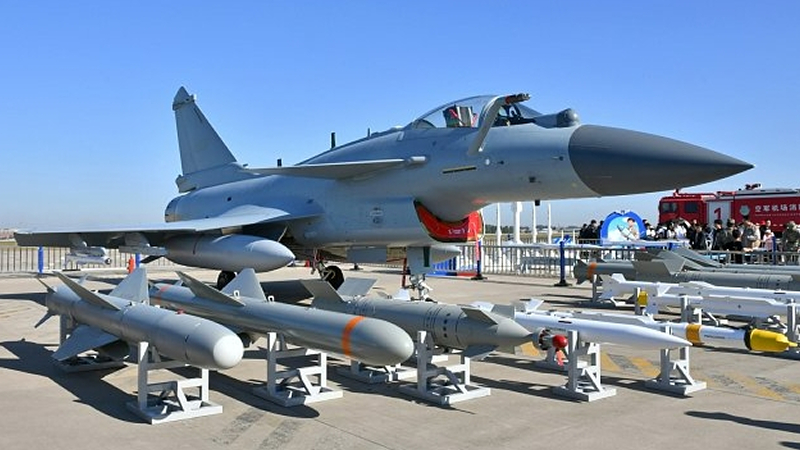
The Eurofighter Typhoon, a cornerstone of North Atlantic Treaty Organization (NATO) airpower, suffered a decisive defeat to a Chinese-built fighter during a multinational exercise in the Middle East. Pakistan Air Force-operated J-10CE fighters reportedly outperformed the Eurofighter Typhoon across both beyond-visual-range engagements and close-in maneuvering combat. Analysts say the outcome highlights widening differences in competitiveness across key next-generation air combat technologies, including radar systems, electronic warfare, data links, and drones.
Chinese Fighter Capabilities Demonstrated Across Multiple Fronts
According to reporting on June 4 (local time) by prominent Czech military analyst Jiří Vojáček and defense data tracking by China Central Television (CCTV), J-10CE fighters from the Pakistan Air Force’s No. 15 Squadron conducted nine simulated engagements against Eurofighter Typhoons during the multinational “Zilzal-II” air exercise held in Qatar in 2024, winning every encounter. The Pakistan Air Force reportedly secured a 4-0 sweep in beyond-visual-range (BVR) gauntlet rounds conducted outside radar detection ranges and also dominated close-range dogfights that tested maneuverability and thrust-control performance.
The J-10CE is the export version of the Chengdu Aircraft Design Institute’s multirole J-10C fighter. It is equipped with an active electronically scanned array (AESA) radar and can deploy air-to-air missiles. The Eurofighter Typhoon, which participated in the exercises, was jointly developed by the United Kingdom, Germany, Italy, and Spain during the 1980s and has served as a core NATO air asset since entering operational service across Europe in 2007. The exercise results are being interpreted as more than a simple win-loss record, signaling that China’s aerospace industry is rapidly narrowing the technological gap with Western competitors.
The competitiveness of Chinese fighter aircraft has also been demonstrated beyond training scenarios. Pakistan previously stated that during border clashes in the Kashmir region in May of last year, it shot down five Indian aircraft, including three French-built Rafale fighters. The aircraft reportedly employed by Pakistan during the operation was also the J-10CE. The incident marked the first confirmed air-to-air combat kill involving a Chinese fighter aircraft. Earlier this year, China’s State Administration of Science, Technology and Industry for National Defense (SASTIND) formally recognized the achievement in its “Top 10 Achievements of China’s Defense Industry in 2025,” stating that the J-10CE had “shot down multiple enemy aircraft in actual combat conditions.” The U.S. Department of Defense is also reported to have independently verified aspects of the incident.
Weaknesses in European Weapons Systems
Among defense experts, the exercise outcome is increasingly viewed as evidence of limitations within Europe’s weapons ecosystem. One of the key concerns is Europe’s inability to maintain a decisive advantage in radar technology, a critical determinant of success in modern air combat. While the J-10CE’s advanced AESA radar enables simultaneous detection and tracking of multiple targets, some Eurofighter Typhoons remain equipped with older mechanically scanned radar systems depending on the operator and production batch. Efforts to integrate the next-generation Captor-E AESA radar have also progressed more slowly than anticipated.
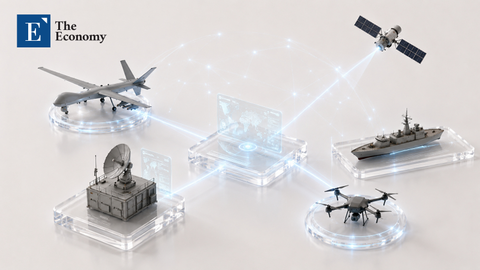
Analysts further argue that the engagements underscore the growing importance of Network-Centric Warfare, where sensors, data links, electronic warfare systems, and missiles operate as an integrated combat architecture. In contemporary air combat, the ability to detect adversaries first, share information in real time, and conduct long-range preemptive strikes has become increasingly decisive. Information gathered by airborne early warning aircraft or ground-based radar systems can be transmitted via data links to fighter aircraft, which then launch missiles based on that targeting data. Throughout the process, electronic warfare systems disrupt enemy radar and communications networks, while interconnected platforms continuously update target information to improve strike accuracy.
Europe has previously revealed vulnerabilities in this domain against China. Last year, a drone masquerading as a Royal Air Force Eurofighter Typhoon was detected conducting low-altitude maneuvers near Hainan Island in the South China Sea. At the time, however, no British fighters could have been operating in the area, and no British aircraft carrier was deployed near either the East China Sea or the South China Sea. China reportedly used electronic intelligence aircraft to collect the ADS-B signal characteristics of Western fighters and replicated them on long-range reconnaissance drones such as the Wing Loong-2. Such tactics can confuse an adversary’s air and maritime surveillance networks, reducing the effectiveness of air defense responses.

A Modern Battlefield Dominated by Advanced Technology
The integration of unmanned technologies into air combat is also viewed as a significant European weakness. Development of drones, artificial intelligence (AI), and manned-unmanned teaming systems has progressed more slowly than in several major competitor nations. Germany, France, the United Kingdom, and Italy are each pursuing next-generation fighter and unmanned aircraft programs, yet practical development timelines have been delayed by complex industrial and political interests. Europe’s flagship future combat initiatives—the Future Combat Air System (FCAS) and the Global Combat Air Programme (GCAP), both centered on manned-unmanned teaming concepts—are not expected to enter operational service until the latter half of the 2030s.
The United States, by contrast, has invested heavily for years in unmanned combat aircraft and Collaborative Combat Aircraft (CCA) programs to secure the core capabilities required for next-generation air warfare. The concept involves deploying multiple AI-enabled unmanned aircraft alongside F-35 fighters and the future Next Generation Air Dominance (NGAD) platform to perform reconnaissance, electronic warfare, missile carriage, and air defense suppression missions. China is also accelerating development of the GJ-11 stealth drone and a range of attack-oriented unmanned systems while rapidly advancing AI-enabled autonomous flight technologies, data-link capabilities, and electronic warfare expertise. Beijing is simultaneously placing greater emphasis on building integrated manned-unmanned combat architectures.
The strategic importance of these advanced air combat capabilities has been demonstrated repeatedly in recent years through both the war in Ukraine and conflicts across the Middle East. Possession of expensive strategic assets such as fighter aircraft, tanks, and aircraft carriers no longer guarantees battlefield superiority in the absence of advanced defensive and countermeasure systems. Against this backdrop, the criteria governing fighter aircraft development are changing rapidly. In the past, performance improvements centered on successive generations of platforms. Today, overall competitiveness is increasingly determined by how effectively advanced technologies are integrated, often outweighing traditional metrics such as maneuverability or engine performance.
As one of the youngest members of the team, Tyler Hansbrough is a rising star in financial journalism. His fresh perspective and analytical approach bring a modern edge to business reporting. Whether he’s covering stock market trends or dissecting corporate earnings, his sharp insights resonate with the new generation of investors.
Similar Post