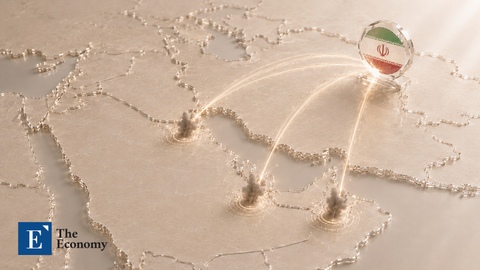
"Investment Safe Havens Crumble" Iranian Offensive Expands to Gulf Civilian Infrastructure, Accelerating Global Investor and Capital Flight from the Middle East

Authored On
Modified
Kuwait airport struck again by Iran just two days after resuming international flights
Saudi Arabia and the UAE carry out covert retaliation against Iran after civilian infrastructure is damaged
Global investors abandon the Middle East, while Dubai’s status as a financial hub comes under pressure
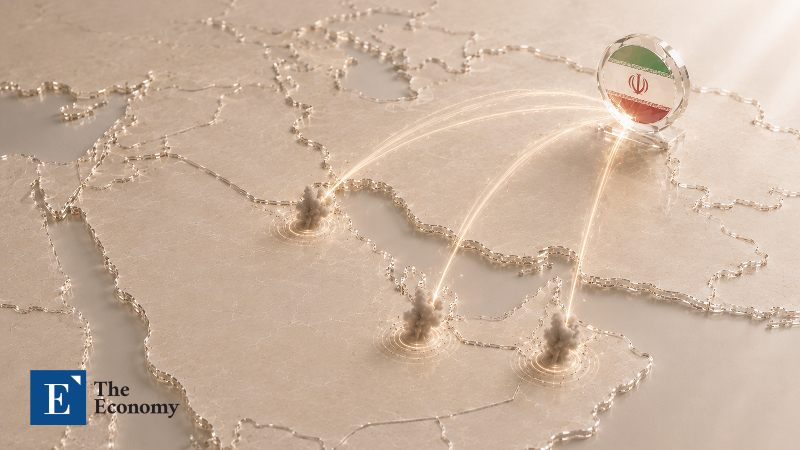
Kuwait International Airport has once again been crippled by Iranian missile and drone attacks. As the Middle East conflict triggered by U.S. strikes on Iran drags on, Tehran has expanded its campaign beyond American military installations and repeatedly targeted civilian infrastructure across Gulf states. Against this backdrop, global investors are increasingly shifting capital away from the Gulf region, now viewed as a high-risk zone, toward safer alternative investment destinations.
Kuwait Transformed Into a High-Risk Zone
On June 3 (local time), Saud Abdulaziz Al-Atwan, spokesperson for Kuwait’s Ministry of Defense, announced in a statement that “Terminal 1 of Kuwait International Airport was targeted today by multiple hostile Iranian drones.” The attack came just two days after international flight operations resumed on June 1. According to Kuwaiti authorities, the country intercepted 13 Iranian missiles and 17 drones that day, but several drones reached airport facilities, causing extensive damage to Terminal 1 and other critical infrastructure. One Indian national was killed, at least 63 people were injured, and numerous airport employees and passengers reportedly required medical treatment. According to Kuwait’s state-run KUNA news agency, aviation authorities immediately suspended all airport operations for safety reasons and diverted incoming flights to alternative airports in neighboring countries.
This was not the first Iranian attack on Kuwait International Airport. In late February, portions of Terminal 1 were damaged in an Iranian drone strike that also injured airport personnel. In late March, the airport’s radar system suffered severe damage after becoming entangled in a drone operation, while April saw a major fire erupt at fuel storage facilities due to the aftermath of additional drone attacks. Repeated assaults forced authorities to restrict or suspend airport operations multiple times, delaying the resumption of international flights for several months.
Prior to the outbreak of the Iran war, Kuwait had been regarded as one of the more stable countries in the Gulf region. Despite its strategic location between Saudi Arabia and Iraq and its role as a host to major U.S. military bases and logistics hubs, it rarely became a direct battlefield in Middle Eastern conflicts. Multinational corporations and investors viewed that stability as a premium attribute and steadily expanded their investments in the country. A nation once emerging as the Gulf’s next major financial and commercial hub has rapidly been transformed into a frontline risk zone in the Middle East conflict.
Escalating Risks of Regional Expansion
Iran has also launched attacks against numerous Gulf states beyond Kuwait. Its operations increasingly target civilian infrastructure directly rather than focusing solely on U.S. military facilities in the region. Saudi Arabia and the United Arab Emirates (UAE) have emerged as the most prominent examples. Attacks on Saudi Arabia intensified in late February immediately after U.S. and Israeli strikes against Iran. In March, the Aramco Ras Tanura refinery complex—one of the world’s largest oil refining facilities—was struck by drones, followed by a series of attacks targeting energy assets including the Shaybah and Berri oil fields. In the UAE, ports, airports, and data centers have also come under repeated attack. According to The Wall Street Journal (WSJ), the UAE has been subjected to thousands of Iranian drone and missile attacks since the early stages of the conflict.
These countries are also reported to have carried out retaliatory strikes against Iran behind the scenes. The shift marks a significant departure from the previous posture of Gulf states, which had sought to avoid military involvement out of concern for a broader regional war. On May 12, Reuters, citing Western officials and Iranian sources, reported that Saudi Arabia had conducted multiple covert airstrikes against Iranian territory in response to missile and drone attacks launched by Tehran. The operation, reportedly carried out by the Royal Saudi Air Force in late March, is widely viewed as the first direct Saudi strike on Iranian soil.
The UAE has likewise moved beyond a purely defensive stance and engaged in direct military action. According to WSJ, the UAE coordinated with the United States and Israel to conduct dozens of strikes against Iranian military and energy facilities. Targets reportedly included the Lavan Island refinery complex in the Persian Gulf, the Asaluyeh petrochemical complex, and military facilities on Qeshm Island. In particular, the strike on the Lavan Island refinery in early April reportedly triggered a massive fire that disabled a significant portion of Iran’s production capacity. As major Gulf states become increasingly active participants in the conflict, regional tensions have risen sharply.

Global Investors Effectively Turn Their Backs on the Middle East
Global investors have responded with extreme sensitivity to these developments. Dubai, once regarded as a paradise for the world’s wealthy, has become one of the clearest examples of this trend. According to The Economist and other sources, between three million and four million affluent expatriates and their family members reside in the UAE out of a total population of 12 million, and a substantial share of them have already left Dubai since the outbreak of the Iran war. Concerns that Iranian missiles and drones could strike the heart of Dubai have spread rapidly. Dominic Volek of migration consultancy Henley & Partners recently told CNN that “inquiries from UAE residents regarding overseas immigration and residency programs have increased by more than 40% over the past several weeks.”
Iran has already carried out multiple attacks targeting Dubai. On February 28, immediately after the conflict erupted, a large-scale Iranian missile and drone attack sparked a fire at the Fairmont The Palm hotel on Palm Jumeirah. Debris also fell in residential areas near Dubai Marina and the Burj Khalifa, causing injuries. On the same day, the Burj Al Arab—one of the UAE’s most iconic landmarks alongside the Burj Khalifa—sustained damage from debris generated during interception operations. In March, explosions and fires occurred near the U.S. Consulate in Dubai, while Dubai International Airport temporarily suspended operations following another Iranian attack. These tensions persisted even after the temporary ceasefire between the United States and Iran. Last month, explosions caused by the interception of Iranian missiles were heard over Dubai, and evacuation alerts were issued to residents.
Experts believe that even if the war eventually ends, investors are unlikely to return to Dubai in large numbers. The city’s image as a safe haven insulated from Middle Eastern conflicts has been fundamentally damaged. One financial expert noted, “Global high-net-worth individuals and investors prioritize political and security stability above tax advantages when selecting jurisdictions,” adding that “capital tied to real estate and financial assets tends to become entrenched in alternative destinations once it leaves.” The expert further stated, “With Middle Eastern financial hubs such as Dubai and Kuwait now viewed as high-risk zones, capital that has relocated to Singapore, London, Zurich, Monaco, and other destinations is unlikely to return to the region.”
Similar Post