Volkswagen’s Own Board Concedes ‘Collapse of the Import Model,’ as Germany Risks Becoming a Contract Manufacturing Base for Chinese Automakers

Authored On
Modified
Volkswagen faces its deepest crisis in a decade since Dieselgate
Failed EV transition and weakening China operations fuel management turmoil
German automakers seek revival through partnerships with Chinese firms
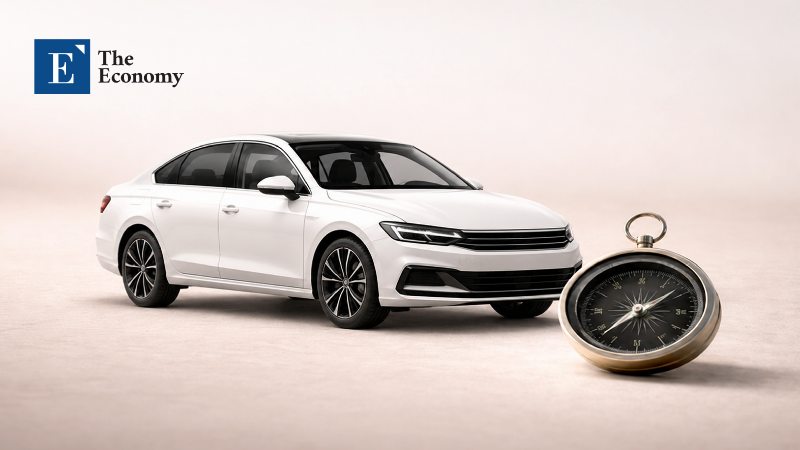
Volkswagen, once hailed as “Germany’s people’s car” and a dominant force in the global automotive industry, is confronting what may be the gravest crisis in its history. Internal voices within the group have gone so far as to acknowledge that the company’s current business structure is no longer sustainable. A failed electric-vehicle strategy and a rapid erosion of its position in China, formerly its most important market, have combined to shake the industrial giant at its foundations. Proposals now being discussed include sharing European factories with Chinese manufacturers. The German automotive industry, which once dominated the Chinese market, now finds itself contemplating the role of providing European production bases for Chinese EV makers.
Six of Nine Directors Warn of “Risk of Collapse,” Operating Margin Falls to 2.8%, Worst Since Dieselgate
According to a report by German business magazine Manager Magazin on June 18 (local time), citing the results of an internal survey submitted to Volkswagen’s supervisory board in April, six of the company’s nine directors described Volkswagen as being at “risk of collapse,” while the remaining three characterized the situation as “urgent.” All directors agreed that the current business model lacks profitability. Every board member also reportedly concluded that the company’s strategies in China and North America are not sustainable. Earlier, Chief Executive Officer Oliver Blume publicly referred to Volkswagen as a “restructuring case” (Restrukturierungsfall).
Volkswagen’s financial performance supports that assessment. Net profit for the first quarter fell 28.4% year over year to $1.80 billion. Operating profit declined 14.3% to $2.83 billion, while revenue slipped 2.5% to $86.96 billion. On a full-year basis, operating profit dropped 53% from the previous year to $10.24 billion, pushing the operating margin down to 2.8%. It marked the company’s weakest performance since the 2015–2016 Dieselgate emissions-cheating scandal, when Volkswagen incurred massive one-off costs.
The deterioration in earnings has translated into credit-rating pressure. Moody’s downgraded Volkswagen’s credit rating last year from A3 to Baa1, marking the first downgrade since the Dieselgate scandal a decade ago. Fitch currently rates Volkswagen at A-, while Standard & Poor’s assigns a BBB+ rating. Moody’s cited four factors behind its outlook: escalating trade tensions, structural challenges associated with the EV transition, intense competition in China, and software investment risks. The agency warned that operating performance would remain under pressure over the next 12 to 18 months.
China Sales Collapse as Critics Quip, “The Sausages Sell Better Than the Cars”
Volkswagen continues to struggle in China, one of its key markets, even as global EV demand loses momentum. According to China EV DataTracker, a Chinese EV market analytics platform, Volkswagen’s EV sales in China totaled just 4,552 units in January, down 71% from a year earlier. Sales of the flagship ID.7 electric sedan collapsed from 2,269 units last year to only seven units in January. As China’s auto market rapidly shifted toward electrification, Volkswagen failed to adapt to changing consumer preferences. Local brands such as BYD and Nio expanded aggressively through competitive pricing and technological innovation, sharply narrowing Volkswagen’s market position.
Cariad, Volkswagen’s automotive software subsidiary, has become a persistent burden. The company recorded an operating loss of $2.64 billion last year, an increase of $40 million from the previous year. Volkswagen established Cariad to support its transformation into a Tesla-style fully electric vehicle manufacturer. However, the software has been widely criticized for frequent glitches, touchscreen failures, and driving-related errors.
As Volkswagen Group’s efforts to vertically integrate its EV and software operations encountered setbacks, its market share steadily eroded. Persistent software problems were compounded by a lack of compelling new technologies and vehicle launches. The overwhelming brand power Volkswagen once enjoyed in the internal-combustion vehicle era has lost much of its effectiveness. Performance at its Chinese joint ventures deteriorated sharply, and a market that once generated a substantial share of group profits has become a growing liability. The company’s global sales foundation itself is under significant strain.
As Volkswagen’s management challenges deepen, some critics have begun mockingly referring to it as a “sausage company.” Since 1973, Volkswagen has produced its own currywurst sausages for factory cafeterias and regional sales in Lower Saxony, where its headquarters are located. Last year alone, the company sold 8.552 million sausages, approaching its vehicle sales volume of 9.037 million units. Commenting on the figures, German newspaper FAZ remarked that “sausage sales appear poised to overtake automobile sales,” adding that it was unclear whether this constituted good news or bad news for the company.
The Humiliating Reality Facing German Automakers
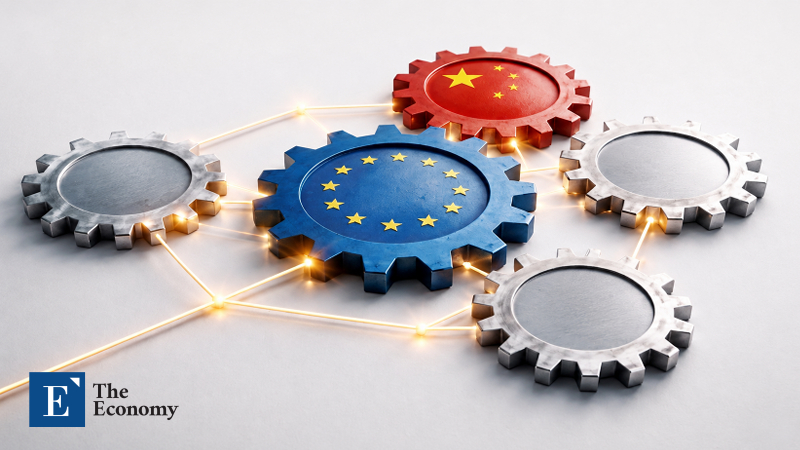
An even more painful signal is emerging from Lower Saxony, Volkswagen’s home base. State Premier Olaf Lies publicly proposed allowing Chinese automotive brands to manufacture vehicles in Volkswagen’s German factories. The suggestion reflects a growing sense of urgency: rather than treating Chinese EV makers solely as competitors, Germany could preserve jobs by producing their vehicles under contract at Volkswagen facilities. The fact that the leader of Lower Saxony—the state that serves as Volkswagen’s second-largest shareholder—would make such a proposal underscores the difficult reality confronting Germany’s automotive industry.
CEO Blume has also expressed support for the idea. He recently stated that “joint utilization of excess manufacturing capacity in European plants with Chinese companies could be a very intelligent solution.” After Blume previously identified defense-industry contracts and factory-sharing arrangements with Chinese firms as potential remedies for Volkswagen’s difficulties, speculation emerged that partnerships similar to those recently formed between global automakers and Chinese manufacturers could be under consideration. While Blume denied that any plans or discussions with Chinese manufacturers were currently underway, he acknowledged that a transition from Germany-centered export models toward localized production models in major markets, including China, had become unavoidable.
Volkswagen has already reduced production capacity by approximately one million vehicles and is moving forward with workforce reductions in Germany. Given the strong influence of labor unions, plant closures and restructuring efforts remain politically and socially difficult. As a result, management is examining shared production arrangements as a means of raising factory utilization rates. The company is also reportedly exploring expanded cooperation with Chinese partners. According to Euronews, Volkswagen is considering introducing vehicles jointly developed with SAIC Motor, FAW Group, Horizon Robotics, and XPeng into the European market.
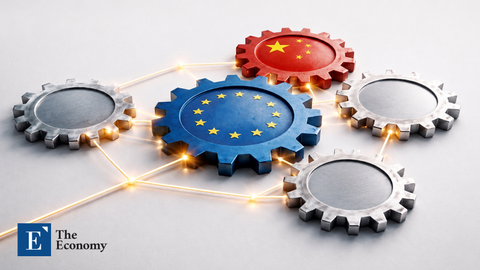
The rationale behind such cooperation is clear. Volkswagen needs solutions to improve utilization rates at European factories, while Chinese automakers require local manufacturing bases to circumvent European Union tariffs on EV imports. In October 2024, the EU imposed definitive countervailing duties on Chinese-made battery electric vehicles. Additional tariffs of 17.0% for BYD, 18.8% for Geely, and 35.3% for SAIC Motor were added on top of the existing 10% import duty. By manufacturing within Europe, Chinese companies can reduce tariff exposure while improving access to subsidies and public procurement markets.
Such developments are already becoming reality across Europe. Chery Automobile has partnered with Spain’s EV Motors to begin vehicle production at the former Nissan plant in Barcelona’s Zona Franca district. A European automotive factory left vacant after Nissan’s withdrawal has effectively been revived as a production base for a Chinese brand. While the Chery-Ebro joint venture has been framed as a job-creation initiative, its industrial significance is far more consequential. Production facilities that Europe failed to preserve are being repurposed by Chinese manufacturers as platforms for expanding their presence in the European market. Stellantis, the world’s fifth-largest automaker, is likewise embracing a manufacturing role for Chinese firms. The company plans to produce Leapmotor’s B10 electric SUV at its Zaragoza plant in Spain. Hongqi, the premium marque under China’s Dongfeng Motor and FAW Group, is also expected to outsource production to Stellantis. Even with full awareness of China’s strategic ambitions, European automakers increasingly find themselves in a position where surrendering market share has become a growing risk.
- Previous “Oil Producers Unable to Celebrate Despite Hormuz Reopening” Dual Pressure From Iran’s Return and Expanding Bypass Routes Threatens Middle East Economies
- Next "From Admitting Chinese Capital to Strengthening Digital Alliances" EU Faces a Strategic Crossroads Amid Decoupling From the U.S. and the Push for Technological Sovereignty
Similar Post